
30–60 minute commuting times into central London

Short Term Nanny London for Flexible, Trusted Childcare When You Need It Most
Short term nanny support in London reflects how the city actually functions: compressed time, long commutes, and school schedules that end hours before the working day does.
Across Islington, Hackney, Clapham, Dulwich, and Chiswick, many families manage 30–60 minute commutes into central London employment hubs such as the City, Canary Wharf, and the West End. In these households, childcare is not occasional—it is part of daily operational life.
Most families using short-term childcare earn £70k–£200k+, typically working in finance, law, healthcare, tech, or media. Work rarely ends at school pickup time due to meetings, travel, and hybrid schedules that extend unpredictably.
School finishes around 3pm, while parents often return after 6–7pm. Short-term childcare in London typically costs £15–£20 per hour, with full-day cover reaching £600–£1,000+ weekly depending on demand and experience.
In practice, many parents now rely on structured childcare networks and our platform to quickly connect with vetted local nannies and carers when schedules shift unexpectedly—without the delay of long searches or informal referrals.

Short Term Childcare in London – Why Modern Family Routines Depend on It
Short term childcare exists because work schedules and school systems do not align in London.
For many parents, the need only becomes visible when a disruption exposes the gap between school end times and working hours.
Common real-world triggers in London households include:
-
 Meetings running beyond scheduled hours
-
Hybrid workdays extending unexpectedly
-
School or nursery closures
-
Transport delays (30–60 minute commutes are typical)
-
Work travel in consulting, law, or finance
In these moments, families often turn to our childcare network to find short-notice childcare support in their area, helping reduce disruption to both work and home routines.
Explore nanny options near you
Short Term Childminder in London for Structured Home-Based Stability
Short term childminders provide Ofsted-regulated care in structured home environments, often used to bridge working-hour gaps.
They are commonly part of weekly routines in residential boroughs like Hackney, Islington, and Wandsworth, where commuting patterns make after-school coverage essential.
Typical usage includes:
-
 Morning care before work starts
-
After-school gap (3–6pm)
-
Full-day emergency childcare
-
Holiday and inset-day coverage

Short Term Babysitter London - Evening, Weekend, Emergency Coverage
Short term babysitters are used when family life extends beyond structured weekday routines and overlaps with work, travel, or social commitments.
This is especially common in high-pressure sectors like finance, consulting, healthcare, and media, where schedules are unpredictable.
Typical scenarios include:
-
Late work beyond 6:30–8pm
-
Weekend events or travel
-
Transport delays affecting return home
-
Emergency childcare gaps
-
Bedtime supervision and evening routines
Families often use our childcare database to quickly match with available babysitters who already have verified experience and references, especially when time is limited.
Get matched with local babysittersWhy Short Term Nanny London Support Is Structurally Needed
Short term nanny support is not occasional—it reflects how London households function daily.
Key structural pressures include:
Dual-income households working full-time hours
Hybrid schedules that still require full-day availability
School finish times that do not align with work hours

In Zones 2–3 areas such as Highbury, Dulwich, and Chiswick, childcare is part of daily logistics infrastructure, not occasional planning.
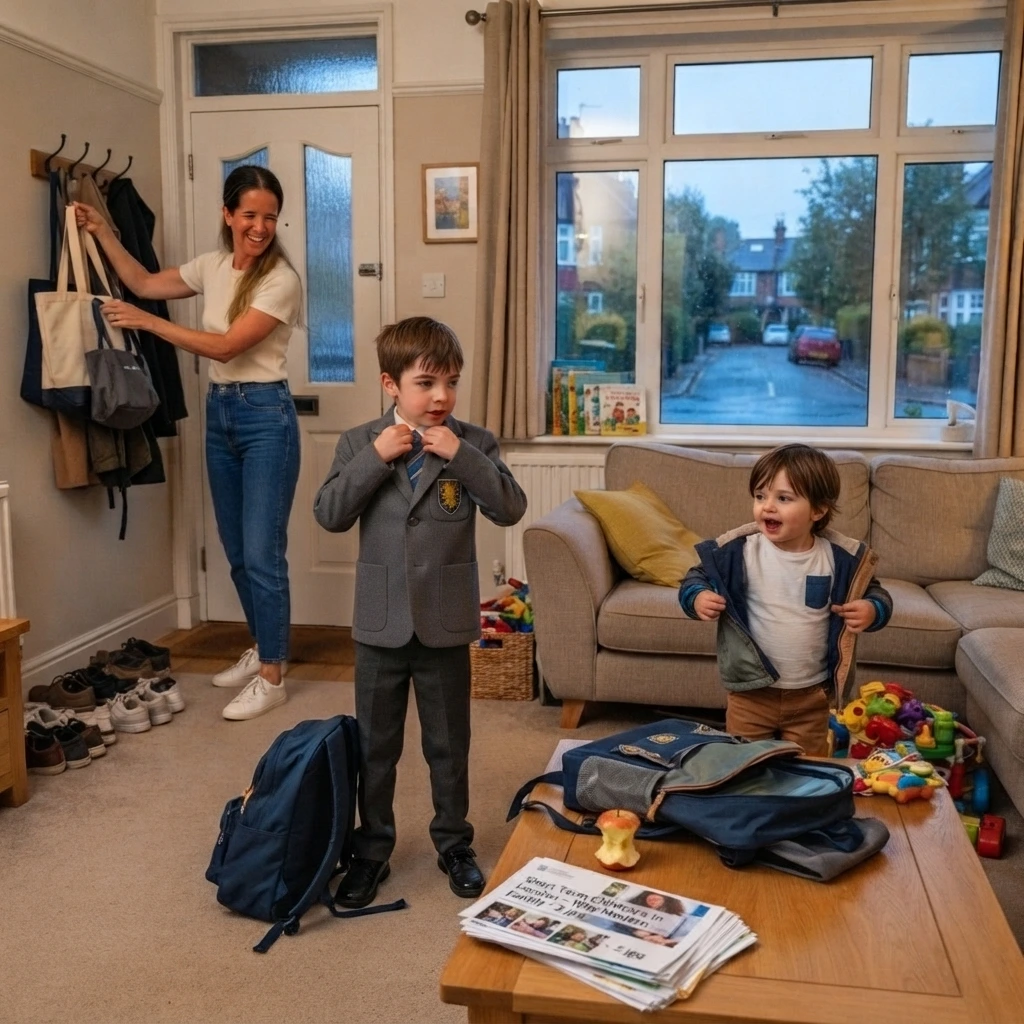
The 3–6pm Gap in London (Core Daily Pressure Point)
This is one of the most consistent childcare gaps in London family life.
School finishes around 3pm, while parents typically return home between 6–7pm, creating a daily 2–3 hour gap.
What this gap involves in practice:
-
School pick-up and transition home
-
Decompression after structured school day
-
Homework and reading support
-
Transport to after-school activities
-
Supervision until parents return
This gap is particularly persistent in boroughs like Camden, Hackney, and Clapham due to high dual-income density and commuting dependency.
Trusted Short Term Childcare in London (Safety and Reliability Layer)
Trust is the primary decision filter in childcare selection—more important than cost or convenience.
Parents typically evaluate:
 Enhanced DBS verification
 Proven UK childcare experience
References from similar households
Punctuality and reliability history
Ability to follow household routines immediately
In London’s working environment, missed childcare directly affects professional commitments, making reliability essential rather than optional. This is why many families prefer using our platform, where checks, profiles, and availability are already centralised in one trusted system.



Flexible Childcare That Reflects Real London Family Life
Short term childcare reflects the reality of modern London living: compressed time, long commutes, and unpredictable work patterns.
Our childcare platform and network connects families with vetted childcare professionals across London boroughs, helping parents make safer and more confident childcare decisions within their local communities.
It also supports childcare professionals in building verified profiles and connecting with families who need reliable, real-world childcare support.
Sign up for a free accountWhat Parents Are Saying

Andrea A.


Claudia D.

Jesse U.
FAQs
Why do parents in Hackney, Islington, and Stratford rely on short-term childcare after school?
Parents across Hackney, Islington, and Stratford rely on short-term childcare because most primary schools finish around 3:00–3:30pm, while working hours in central London areas like the City, Canary Wharf, and Shoreditch often extend to 6pm or later. With 35–60 minute commutes on the Central, Jubilee, and Overground lines, a consistent short-term gap appears where temporary care is needed before school pickup or early evening return.
What triggers last-minute short-term childcare needs in London households?
Last-minute short-term childcare in London is typically triggered by unexpected work demands such as late meetings, urgent deadlines, hospital shifts, or travel delays across the Tube and rail network. In dual-income households earning £70k–£200k+, even a single disruption creates an immediate short-term childcare gap, particularly in high-pressure sectors like finance, law, healthcare, and tech where schedules frequently extend beyond school hours.
How do commuting times in North and East London affect short-term childcare needs?
Commuting times of 35–60 minutes from areas like Hackney, Highbury, Stratford, and Dalston into central London directly shape short-term childcare needs. Parents leaving offices in the City or Canary Wharf at 5:30–6pm often cannot physically reach schools before closure or after-school activity pickup times, making short-term care essential for bridging travel delays and fixed school schedules.
Why is the 3–6pm window the most common time for short-term childcare in London?
Across London boroughs such as Islington, Camden, and Lambeth, the 3–6pm window is the most common trigger for short-term childcare because school typically ends at 3–3:30pm while parents are still working or commuting. This creates a predictable 2–3 hour short-term gap where temporary care is used specifically for pickup, supervision, homework, meals, and activity transitions until parents return.
How does short-term childcare support unpredictable work schedules in London?
Short-term childcare supports unpredictable work schedules common in London's finance, media, healthcare, and consulting sectors, where working hours often extend beyond planned school-day alignment. Parents in areas like Shoreditch, Canary Wharf, and the City use temporary care to cover short-notice evenings, delayed finishes, or unexpected commitments without needing long-term childcare arrangements.
Why is trust such a critical factor in short-term childcare across London?
Trust is critical because short-term childcare is often arranged quickly and used during high-pressure work situations or emergencies. Parents across Hackney, Camden, and Wandsworth typically require DBS-checked carers with verified UK childcare experience and strong references. Even for a few hours of care, safeguarding and reliability are essential due to limited time for vetting decisions.
How do London families manage the cost of short-term childcare?
London families manage short-term childcare costs by using it flexibly during peak work periods, travel, or school gaps rather than as a full-time solution. Typical rates of £15–£20 per hour mean an after-school block (3–7pm) can cost £60–£80 per day, with weekly usage reaching £600–£1,000+ during busy periods. This reflects how costs scale directly with commuting-heavy, dual-income working patterns.
Why has short-term childcare become a structural part of London family routines?
Short-term childcare has become structural in London because school schedules, long commutes, and unpredictable work patterns rarely align. In boroughs like Hackney, Islington, and Stratford, parents routinely rely on temporary care to bridge short but recurring gaps between school finishing times and central London working hours, making it a practical response to everyday urban time pressure rather than an occasional solution.